
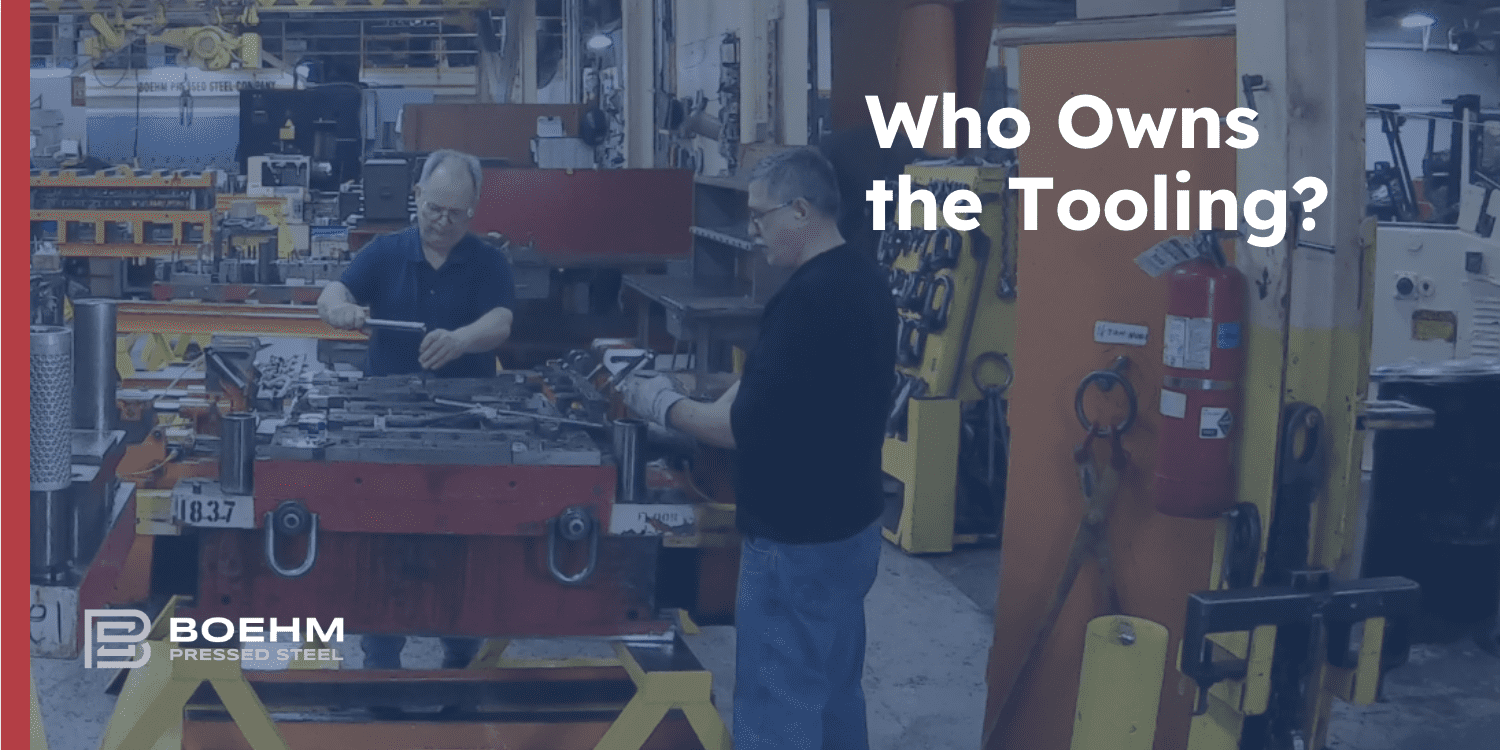
Who Owns the Tooling? What Metal Stamping Buyers Need to Know Before They Sign
If you’ve ever gotten a quote from a metal stamping company and noticed a line item for tooling, sometimes tens of thousands of dollars, you’ve probably had questions. Who owns those dies once they’re built? What happens if you want to move your parts to a different supplier? And is that cost negotiable?
These are some of the most common questions we hear from engineers and procurement teams, and they’re worth answering clearly. Because tooling is one of the most important and most misunderstood aspects of a stamping relationship.
What Is Tooling, and Why Does It Cost What It Does?
In metal stamping, tooling refers to the dies and fixtures used to form your parts. Every stamped part requires custom tooling designed specifically for that geometry: the right punch, the right die, the right clearances to produce the part to your print. Progressive dies, which perform multiple operations in a single pass through the press, are particularly complex and can represent significant engineering and fabrication investment.
The cost of tooling varies widely depending on the complexity of the part, the number of operations required, the material being stamped, and the expected production volume. Simple single-hit tools might run a few thousand dollars. Complex progressive dies for high-volume production can run considerably more. That range is real, and it’s worth asking your stamping partner to walk you through what’s driving the number on your specific program.
Who Owns the Tooling?
In most cases, when a customer pays for tooling, they own it. The tooling is an asset that belongs to you, not to the stamper, even if it lives in the stamper’s facility. This is standard practice in the industry and should be spelled out clearly in your contract.
At Boehm, we design and build tooling in-house, which gives us control over the timeline, the quality, and the cost. When you pay for tooling at Boehm, that investment belongs to your program. We maintain it, store it, and treat it with the same care we’d give our own equipment, because we know what it represents.
What Happens to Tooling If You Change Suppliers?
This is where things get complicated, and it’s something buyers don’t always ask about until it’s too late.
If the tooling is yours, legally and contractually, you have the right to move it. But there are practical considerations. Tooling built for one press environment may require modification to run on a different press. The dies may be sized, configured, or designed around specific press bed dimensions, tonnage, or feed systems. Before assuming your tooling is plug-and-play elsewhere, get a straight answer from both your current and prospective supplier.
That said, if you’ve been with a stamping partner for years and the relationship isn’t working, you shouldn’t feel locked in by tooling you paid for. A reputable supplier will be straightforward about what it would take to move the program and won’t hold tooling hostage as a retention strategy.
Who Pays for Tooling Maintenance and Repairs?
Dies wear over time. Punches dull. Sections break. The question of who pays for ongoing maintenance is another one worth settling up front.
Routine maintenance, sharpening punches, cleaning the die, preventive adjustments, is typically absorbed by the stamper as a cost of running good production. Major repairs due to normal wear over a long production run are often shared or negotiated. Damage caused by misuse or running off-spec material is a different conversation.
At Boehm, we track tooling condition proactively. Our in-house tool room means we’re not waiting on an outside shop to fix a broken section. We’re addressing it on our timeline, not someone else’s. That keeps your production schedule intact and keeps surprise tooling bills to a minimum.
Should You Amortize Tooling Into the Part Price?
Some stampers offer to amortize tooling costs over the first production run rather than charging it upfront. This can be attractive from a cash flow standpoint, especially for new programs with uncertain volume. The trade-off is that your per-part price will be higher until the tooling is paid off, and if the program gets cancelled early, you may owe the remaining balance.
If amortization is important to you, ask for it. Most stampers are willing to work out an arrangement. The key is making sure the terms are clear, including what happens if volumes come in lower than projected.
The Bigger Question: Are You Getting the Right Tooling for the Job?
Tooling cost is only one piece of the picture. What matters more is whether the tooling is designed correctly for your part in the first place. Poorly designed tooling produces inconsistent parts, creates maintenance headaches, and costs more over the life of the program than well-engineered tooling would have upfront.
This is where experience counts. A stamping partner who has been building dies for over 100 years has seen what works and what doesn’t across thousands of programs and dozens of industries. They can look at your drawing and tell you whether the design is going to create tooling challenges and often suggest modifications that make the part easier to stamp without changing its function.
That conversation is worth having early. The best time to optimize a part for stampability is before the tooling is built, not after.
Have questions about tooling for your next metal stamping program? The Boehm engineering team is happy to walk through your parts, your volumes, and your timeline and give you a straight answer on what it’s going to take to run them right.